
The National Capital Territory of Delhi stretches across a vast area and is home to a large and diverse population. As the seat of both the Central Government and the Government of the National Capital Territory of Delhi, it has evolved into a hub of administrative, social, cultural, and economic activity. The city’s landscape is dotted with public buildings including government offices, universities, hospitals, shopping complexes, and tourist sites that form the backbone of civic life.
Given the critical role public buildings play in Delhi, a key question arises: are these spaces equally accessible to all, including persons with disabilities?
To examine and address accessibility barriers in Delhi and assess how the mandates under the RPWDA are implemented at the local level, the ‘Building Better Cities’ project was initiated. The project undertakes a comprehensive study of the legal and regulatory framework governing public building accessibility at the state level. In doing so, it maps the unique governance structure in Delhi across central, state, and local levels; identifies Delhi’s state-level legal frameworks that govern accessibility and examines how they align with national accessibility mandates. Finally, the project suggests actionable measures that will facilitate better compliance and implementation of accessibility standards on ground, in Delhi’s public buildings.
Vidhi’s Building Better Cities research has now been integrated into Sugamya Bharat App, following a suggestion from the Director, Department of Empowerment of Persons with Disabilities (DEPWD), Ministry of Social Justice and Empowerment, marking a significant step toward turning accessibility law into on-the-ground impact. Developed by the Department of Empowerment of Persons with Disabilities, the App is India’s national platform for identifying accessibility gaps and sharing authoritative resources.
Vidhi’s Intervention
- Using Delhi as a pilot, the series translates accessibility mandates from statute to street.
- It maps the legal framework, roles of public authorities, and surfaces implementation bottlenecks that routinely stall compliance.
- Most importantly, the work offers clear, actionable guidance to close these gaps, equipping officials, practitioners, and citizens with tools to demand and deliver accessible public infrastructure.

Filed Under
About the Authors

Somya is a Senior Resident Fellow with the Disability (Inclusion and Access) Team at Vidhi, New Delhi wherein she primarily focuses on inclusive education for children with disabilities. She graduated from Ram Manohar Lohia National Law University, Lucknow in 2022 with a specialization in Constitutional law. Prior to joining Vidhi, she worked as a LAMP (Legislative Assistant to Member of Parliament) Fellow to a Rajya Sabha MP. During her fellowship, she worked on matters related to representation of marginalized communities, accessible healthcare, inclusive education, and poverty and unemployment in Bihar. She assisted her MP in drafting four Private Members’ Bills on parliament productivity, private sector reservation, prevention of custodial torture and fraternity. Her interests lie in social policy including the rights of children and disadvantaged groups. In her free time, she likes to dance and read about politics and women centric issues.

Rahul Bajaj is Senior Associate Fellow [Disability Rights] at the Vidhi Centre for Legal Policy. In this role, Rahul works with Vidhi's Disability Inclusion and Access team to provide high quality thought leadership on legal policy issues concerning persons with disabilities, assists the team with various origination and engaged projects, spearheads the team's strategic litigation efforts and assists in building mutually beneficial partnerships. Rahul is also a practicing lawyer in the courts of Delhi and the Co-Founder of an NGO called Mission Accessibility which also works on advancing the rights of the disabled. Rahul's prior experiences including working in the Disputes Practice in Trilegal, Delhi, pursuing two masters in law degrees from the University of Oxford as a Rhodes Scholar and clerking for the current Chief Justice of India, D.Y. Chandrachud.
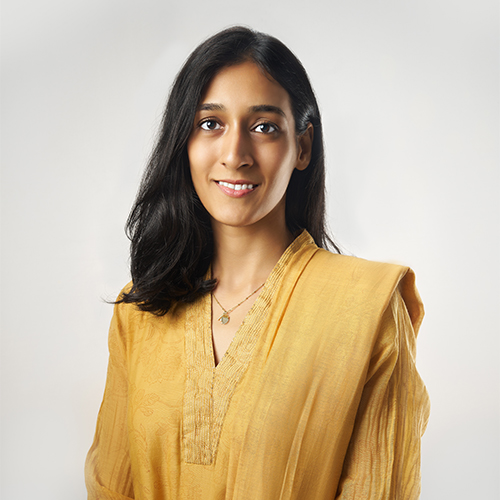
Manmayi is a Senior Resident Fellow working with Disability (Inclusion & Access). Manmayi is a graduate of the National University of Advanced Legal Studies, Kochi (2016). Prior to joining Vidhi, Manmayi worked at the law firm of Dhir & Dhir Associates, where she litigated and provided advisory services to various clients in matters pertaining to the Insolvency and Bankruptcy Code. She has also previously worked with the Centre for Law and Policy Research, where she litigated in the areas of public health, women's rights and rights of disabled.