
Queering the Law: Making Tamil Nadu’s Laws LGBTIA+ Inclusive
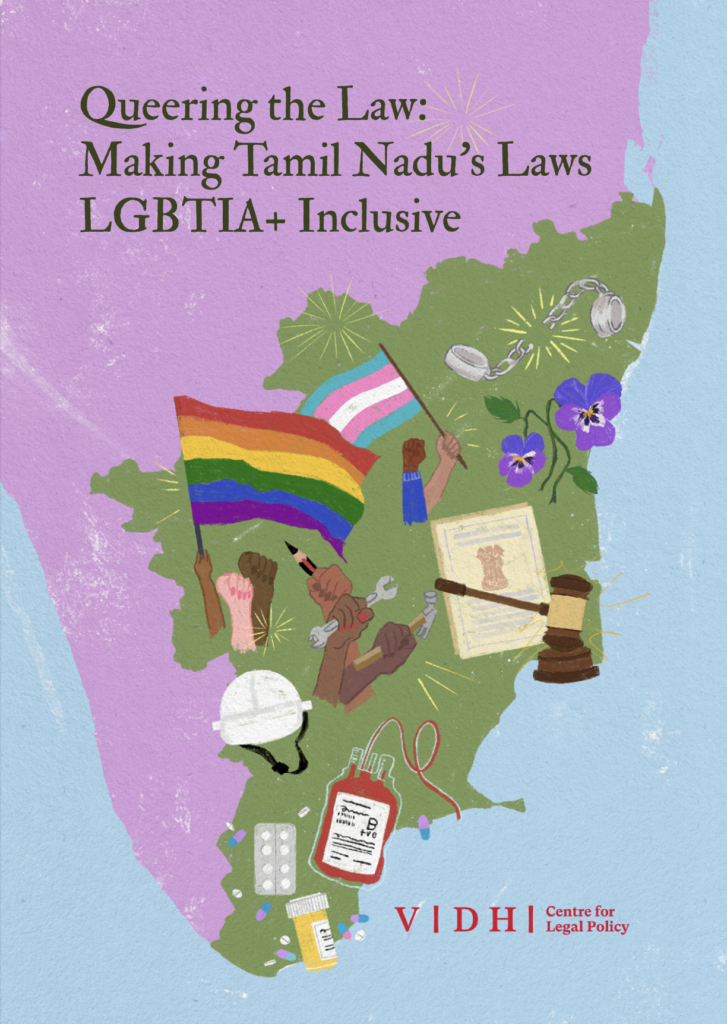
This report, available in Tamil and English, carries out a comprehensive analysis of Tamil Nadu’s state laws and policies, and identifies measures to make them queer inclusive.
The Supreme Court in its landmark judgement on marriage equality Supriyo Chakraborty v. Union of India confirmed that State Legislatures and State Governments have the power to make laws and government measures in their states LGBTIA+ inclusive. In a first of its kind report, ‘Queering the Law: Making Tamil Nadu’s Laws LGBTIA+ Inclusive’ comprehensively maps and analyses Tamil Nadu’s legal landscape and identifies pathways to make the state’s laws and government action queer inclusive.
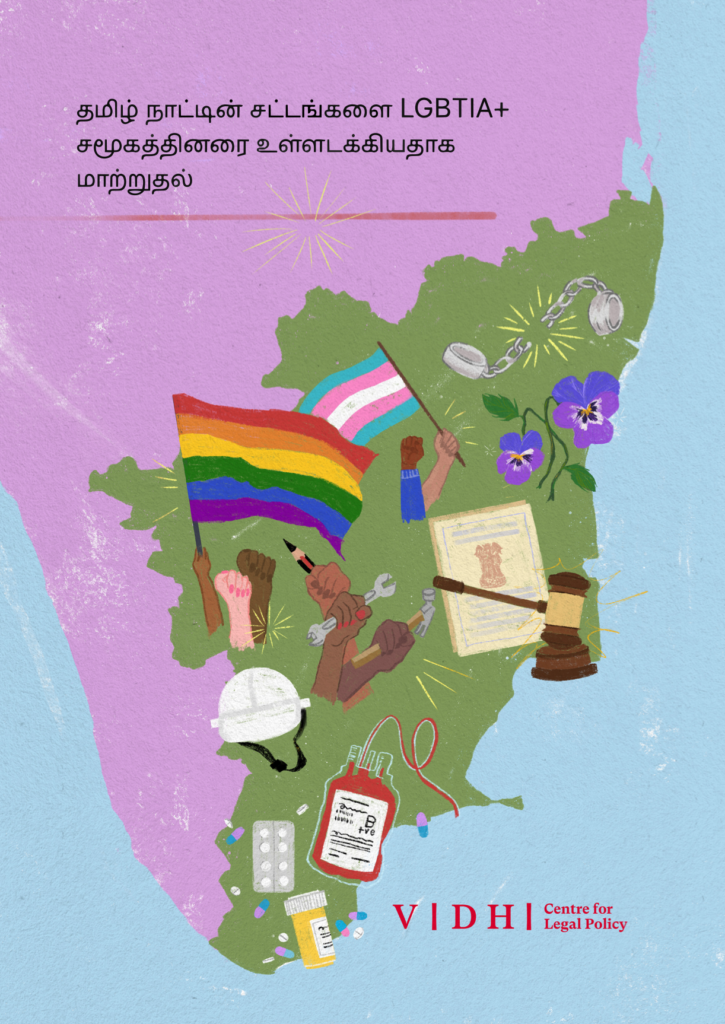
The report is available in Tamil ‘தமிழ்நாட்டின் சட்டங்களை LGBTIA+ சமூகத்தினரை உள்ளடக்கியதாக மாற்றுதல்’ and English.
The report carries out an in-depth analysis of Tamil Nadu’s legal landscape across eight key areas: Gender Identity and Expression, Relationships, Healthcare, Education, Employment and Welfare, Minor Rights, Violence, and Monitoring and Enforcement. While this report focuses on Tamil Nadu’s legal landscape, it also serves as an illustration of how states in India can make their laws queer inclusive.
The report was informed by in-depth consultation and deliberation with various stakeholders, including queer CSO’s and activists, lawyers, healthcare professionals and academics in Tamil Nadu. The minutes can be accessed here.
The consultations and deliberations demonstrate consensus amongst stakeholders across the following issues for law reform:
- Reservations for transgender persons in education and employment as per the NALSA judgement.
- Need for binding government protocols to guide implementation of the Transgender Persons (Protection of Rights) Act, 2019 and rules under it
- Persons in queer relationships must be able to access benefits jointly, particularly those critical to livelihood such as financial benefits, healthcare, and housing.
- Measures to address discrimination in access to goods and services (such as housing, financial services etc.), education, healthcare and employment.
- Clear governing framework for the Tamil Nadu Transgender Welfare Board for effective discharge of functions and accountability.
- Sensitisation of government officers to ensure barrier-free access to existing legal protections, rights and entitlements.
தமிழ்நாட்டின் சட்டங்களை LGBTIA+ சமூகத்தினரை உள்ளடக்கியதாக மாற்றுதல்
தமிழ் அறிக்கை
சட்டத்தை மாற்றுப்பாலினமயமாக்குதல்: தமிழ்நாட்டின் சட்டங்களை LGBTIA+ சமூகத்தினரை உள்ளடக்கியதாக மாற்றுதல் (Queering the Law: Making Tamil Nadu’s Laws LGBTIA+ Inclusive) என்ற இந்த அறிக்கை, மாநில அரசு, குடிமைச் சமூகம், குயர், திருநர் மற்றும் இடைப்பாலினத்தவர் சமூகத்தினர், மற்றும் வழக்கறிஞர்களுக்கான வழிகாட்டும் ஆவணமாக செயல்படுவதை நோக்கமாகக் கொண்டுள்ளது.
இந்த அறிக்கை தமிழ்நாட்டின் சட்ட சூழலை எட்டு அத்தியாயங்களில் ஆய்வு செய்கிறது: பாலின அடையாளம் மற்றும் வெளிப்பாடு; உறவுகளின் சட்ட அங்கீகாரம்; குயர் உள்ளடக்கிய சுகாதார சேவைகள்; தொழில், வேலைவாய்ப்பு மற்றும் நலத்திட்டங்கள்; குயர் உள்ளடக்கிய கல்வி; குயர் சிறார்களின் பாதுகாப்பு; வன்முறையைக் கையாள்வதற்கான நடவடிக்கைகள்; மற்றும் கண்காணிப்பு மற்றும் அமலாக்கம். ஒவ்வொரு அத்தியாயமும் குயர் உள்ளடக்கத்திற்கான தடைகள் மற்றும் பிரச்சனைகளை அடையாளம் காண்கிறது, அவற்றைச் சரிசெய்ய வேண்டிய சட்ட நடவடிக்கைகளை பரிந்துரைக்கிறது, மேலும் அந்த நடவடிக்கைகளை அமல்படுத்த வேண்டிய மாநில அரசு துறை அல்லது அதிகாரத்தையும் குறிப்பிடுகிறது.
தமிழ்நாட்டைச் சேர்ந்த குயர் தலைமையிலான சிவில் சமூக அமைப்புகள், ஆர்வலர்கள், வழக்கறிஞர்கள், சுகாதார நிபுணர்கள் மற்றும் கல்வியாளர்கள் உள்ளிட்ட பல்வேறு தரப்பினருடன் நடத்தப்பட்ட விரிவான ஆவண ஆய்வு, நீதிமன்றத் தீர்ப்புகளின் பகுப்பாய்வு, மற்றும் ஆழமான ஆலோசனைகள் மற்றும் கலந்துரையாடல்களின் அடிப்படையில் இந்த அறிக்கை உருவாக்கப்பட்டது.
குறிப்பு: இந்த தமிழ் அறிக்கை, ஆங்கில அறிக்கையின் மிக முக்கியமான மற்றும் செயல்படுத்தத்தக்க பகுதிகளின் மொழிபெயர்ப்பாகும்.
தமிழ் வடிவத்தில் தற்போது சில மொழிபெயர்ப்புப் பிழைகள் உள்ளன என்பதைத் தயவுசெய்து கவனிக்கவும். திருத்தப்பட்ட வடிவம் விரைவில் பதிவேற்றப்படும்.
Please note that the Tamil version currently contains some translation errors. A corrected version will be uploaded shortly.
To understand what State Governments, including the Tamil Nadu Government, can do to protect transgender rights in light of Transgender Persons (Protection of Rights) Amendment Act, 2026 read our report ‘What Can State Governments Do’ .
Filed Under
About the Authors

Pragya is a Senior Resident Fellow at Vidhi, where she has worked for four years in the area of Legal Design and Regulation. Prior to this, she was a Legal Assistant at the Law and Legislative Department, Government of Chhattisgarh, focusing on regulatory compliance and drafting of State rules and statutes, along with policy research and government contracts. Pragya holds a B.A., LL.B. (Hons.) from Hidayatullah National Law University (2018) and an LL.M. in Constitutional Law from National Law University Odisha (2020). Her research interests include regulatory design, post-colonial feminist studies, and trade law. She is an avid reader with a love for dystopian and fantasy literature.

Namrata is a Senior Resident Fellow in the Legal Design and Regulation Vertical at Vidhi. She primarily handles engaged and commissioned projects from various ministries, statutory authorities and regulators by providing legal research and legislative drafting support. At Vidhi, she has worked with the Ministry of Electronics and Information Technology, the Ministry of Economic Affairs, the Ministry of Women and Child Development and the Department of Consumer Affairs. Namrata also works extensively on queer rights and has initiated and worked on numerous projects on rights of gender and sexual minorities. She has written for the Hindu, the Firstpost, the Economic Times, the Leaflet, Article 14, Indian Express and Varta GenSex Policy Matters. Prior to Vidhi, Namrata taught at the Jindal Global Law School and the West Bengal National University of Juridical Sciences (‘NUJS’), worked with the Migration and Asylum Project on labour laws and policy, the Centre for Popular Democracy in New York City, and the Public Law and Vidhi Aid verticals at Vidhi. She has a BA/LLB from NUJS and a LLM from Columbia Law which she attended in the capacity of a Human Rights Fellow

Jwalika is a Senior Resident Fellow in the Research Director's Office at the Vidhi Centre for Legal Policy, Delhi. She holds a Bachelor of Civil Law (LLM-equivalent) degree from the University of Oxford and a BA LLB (Hons) from the National Law School of India University, Bangalore. Her areas of interest include family law, equality and anti-discrimination law, and human rights, with a special emphasis on gender and sexuality. She is on the Board of Directors at OutLawed India, a not-for-profit organisation working to improve access to law and justice. At Vidhi, she has been providing legislative drafting assistance to various Ministries, Departments, and Authorities of the Central Government and various State Governments.

Kartavi is a Senior Resident Fellow working with the Legal Design and Regulation Team. She completed her B.Sc. LLB (Intellectual Property Hons.) from National Law University Jodhpur in 2018 and obtained her LLM degree from National University of Singapore in 2022. Prior to joining Vidhi, she also worked as a Legal Researcher at the Delhi High Court where she worked on matters ranging from service law and IPR disputes to constitutional law. Her research interests lie in the areas of access to justice, technology policy and digital divide, climate change policy and education. Kartavi also enjoys theatre, cinema and asian literature.

Raagini is a Research Fellow at Vidhi Tamil Nadu. Prior to this, she undertook research on WTO compliance and sustainable trade practices at the Centre for Trade and Investment Laws. She holds a B.A., LL.B. (Hons.) degree from NALSAR University of Law, Hyderabad (2022). Her areas of interest include gender, human rights and anti-discrimination laws. Outside of her work, she is a trained rifle shooter and enjoys surfing, scuba diving and learning about marine life.