When Protest Meets Force
The Constitutional Limits of Policing Dissent
**Soham Jadhav
When the law enforcing authorities become the lawbreaker, the result is an assault on human dignity, on the law itself and on all institutions of public authority.
– UN, Human Rights on Less-Lethal Weapons (2010)
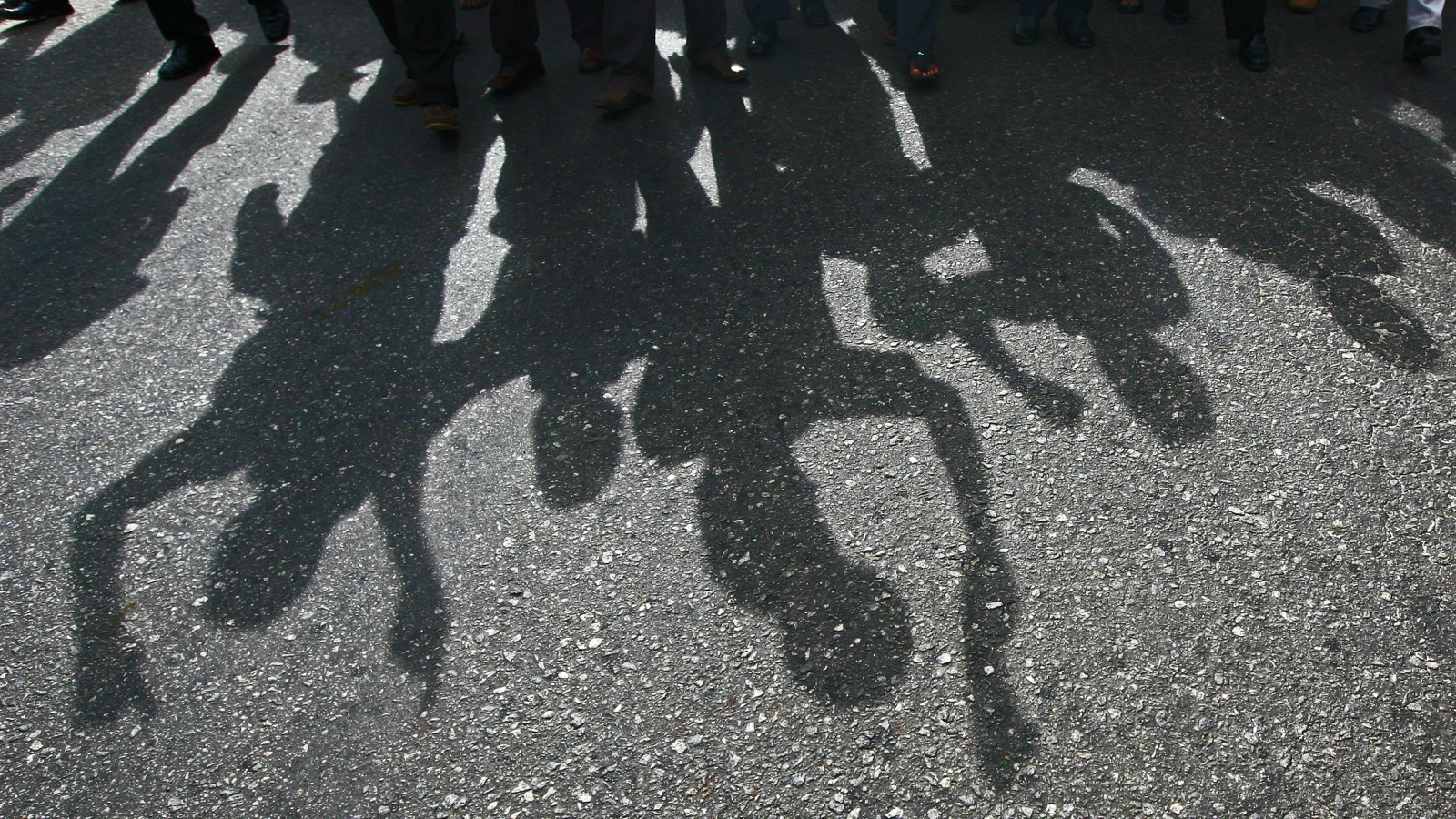
On July 20, 2026, thousands of young students, angry over paper leak, marched from Mandi House, towards Parliament as part of the “Chalo Sansad” movement. What followed was lathi charges, tear gas and illegal detention of students. Petitions soon were filed before the Supreme Court alleging that police had gone far beyond what the law allows. Hearing one such plea, a bench led by Chief Justice of India Surya Kant made an important observation “Right to peaceful, lawful protest is absolutely guaranteed under the Constitution. So long as it is peaceful agitation…merely because there is agitation, there cannot be police excess”
India is a democracy because power is supposed to sit with the people; the government is elected to represent citizens, not to rule over them. But that power cannot only show up once every five years on an election ballot. When a government does not respond to a genuine grievance, like the one these students are raising, protest allows citizens to demand answers in the present rather than wait for the next election.
The right to peaceful protest is not something the State is doing citizens a favour by allowing; it is a fundamental right that the State is constitutionally bound to protect. It allows people to speak, organise and hold those in power accountable without fear of retaliation. When the State responds with force, mass arrests or intimidation, it risks pushing legitimate dissent underground. In some situations, this can reflect a failure of dialogue and negotiation, allowing grievances to persist or even escalate. A right that exists only on paper, but is punished when people actually exercise it, is not a meaningful right at all.
This was not a politically driven agitation but these were students, united by one demand accountability over an exam that decided their futures. Several students had died by suicide over the paper leak. These deaths were reportedly part of what pushed the movement forward in the first place. When people are asking a government to answer for its failures, arresting them turns the exercise on its head. If criminal record of students picked up in one’s early twenties doesn’t end with the protest; it can follow someone into every job and background check for years.
Peaceful protest is a core pillar of democracy. Article 19(1)(a) gives every citizen the right to freedom of speech and expression, including peaceful protest in collective form. Article 19(1)(b) of the Constitution gives every citizen the right to assemble peaceably and without arms and Article 19(1)(d) gives citizens the right to move freely throughout the territory of India, which enables people and allows them to travel to a protest site. These fundamental rights are basically what makes a protest lawful. However, Article 19(3) allows the state to place “reasonable restrictions” on these rights in the interest of public order, sovereignty, and integrity of India. This right applies only in certain circumstances; however, the State cannot restrict it merely because it is inconvenient for the State.
Under Section 189 of the Bharatiya Nyaya Sanhita (BNS), an assembly of five or more persons does not become unlawful merely because it is a protest. To qualify as an unlawful assembly, the group must share a common object such as using criminal force, resisting the law, committing an offence, or compelling others through force or threats. Therefore, a protest that is large, loud, or inconvenient is not automatically unlawful. In practice, however, this distinction is often overlooked, and large gatherings are frequently labelled unlawful whenever authorities view them as disruptive.
Where the power to disperse a crowd comes from
The Chapter XI of the Bharatiya Nagarik Suraksha Sanhita (BNSS) provides “Maintenance of Public Order and Tranquility,” the word, tranquility, is about preserving a general sense of peace among people. In such case of urgency or threats, Section 163 BNSS empowers the Magistrate to issue a prohibitory order wherever there’s an urgent risk to public safety or tranquility.
Delhi Police invoked Section 163, trying to prevent the gathering before beginning of the march turning into unlawful assembly. The state’s power over a protest is meant to start with permissions and prohibitory orders not force. In practice, though, that power is too often used to suppress protest outright rather than to manage it so it can continue peacefully.
Section 148 BNSS provides to Executive Magistrate or a police officer in charge of a station (or, in their absence, an officer not below the rank of Sub-Inspector) to command an unlawful assembly to disperse. If the crowd doesn’t comply to the orders, which permits the police to disperse the people “by using force.” Under Section 149 BNSS the Magistrate can call the armed forces if civil force is not enough, and Section 150 BNSS allows the armed forces officer to act on their own if they can’t reach a magistrate in time, provided they report back as soon as they can.
None of these sections states that “use whatever force is necessary.” It was held by the Supreme Court, in Ramlila Maidan Incident v. Home Secretary, Union of India & Ors. (2012) 5 SCC 1, that the force has to be proportionate. The Court observed that preventive action can not be used as an excuse for excessive or disproportionate force, and therefore, police can not treat a peaceful assembly the same way they’d treat an actual riot.
In Anita Thakur v. Government of J&K (2016) 15 SCC 525, it was held that the state is liable for police excesses against protesters and made it clear that peaceful protest is part of India’s democratic fabric, not something to be neutralized by default or executive whims. These court observation mandates that the power of police authorities to control over unlawful assembly by limiting the rule of proportionality, necessity, and accountability. The moment force excessively used to disperse a crowd in the name of “maintenance of public order” bypassing the legal mandates which was never intended by the Constitution to be done in unauthorized manner.
The guidelines that are supposed to keep this in check
The National Human Rights Commission (NHRC) of India published the Manual on Human Rights for Police Officers in 2011, and the UN Basic Principles on the Use of Force and Firearms provides that police action has to be lawful, necessary, and proportionate to the actual threat in front of them, not some imagined worst case.
The Ministry of Home Affairs, back in 1985, issued a Code of Conduct for the Police in India, Clause 4 states that in securing observance of law or maintaining order, the police should, as far as practicable, use persuasion, advice, and warning first. When force becomes genuinely unavoidable then only the force can be used and more specifically only the “irreducible minimum” that the situation actually calls for.
These safeguards can be strengthened through practical measures such as mandatory identification of police personnel, body worn cameras and independent review of complaints. Clear identification can help fix responsibility for excessive force, while body-worn cameras can provide an objective record of police conduct during crowd control. Independent review can further ensure that allegations of police excess are properly examined. Such measures can strengthen the guidelines already in place and make accountability more effective.
A lathi charge is permissible to push back a crowd blocking a road is legal and valid. However, it was alleged that police personnel allegedly beating students well beyond what was needed to control the crowd, and a lot of students ended up with serious injuries because of it. The weapons used make this even clearer that nailed lathi, pellet guns, electric batons cannot be treated as just and equitable and the injuries they allegedly caused are what make this look less like crowd control and more like punishment to the students.
Also the tear gas should be fired away from a crowd, not to injure them but to disperse the people. It shows how dis-proportionality gets tested not in big questions of “was force justified,” but in small choices, like which direction a canister is pointed.
However, the protest revealed the limitations of these safeguards in the context of public demonstrations. Allegations emerged that plainclothes or unidentified personnel were involved in assaults on protesters and journalists, making it difficult to identify the individuals responsible and seek accountability afterwards. In D.K. Basu v. State of West Bengal (AIR 1997 SC 610), the Supreme Court held that police personnel carrying out arrests or interrogations have to wear clear, visible identification including his name and designation and stop being unaccountable for anything they did. Without accountability, safeguards lose their meaning.
Conclusion
Democracy is not measured by how a government responds to support; it is measured by how it responds to criticism. The right to protest is important in a constitutional democracy because it allows citizens to participate in governance between elections and hold public authorities accountable. When institutions fail or grievances go unheard, peaceful protest becomes one of the few means through which ordinary citizens can demand answers from those who exercise power in their name. Dissent, therefore, is not a threat to democracy but one of its defining features.
The events of July 2026 remind us that the relationship between the State and its citizens is ultimately one of constitutional trust. The Constitution grants the State the authority to maintain public order, but it also places limits on how that authority may be exercised. The use of force cannot become the default response to public dissatisfaction. A democratic government is expected not only to preserve order but to do so in a manner consistent with the values of liberty, dignity, and accountability. When citizens exercising constitutional freedoms are met with excessive force, arbitrary detention, or intimidation, the issue extends far beyond a single protest and begins to affect the legitimacy of democratic institutions themselves.
The pending petitions before the Supreme Court are therefore about more than the events of one day. They raise broader questions about police accountability and the regulation of protests across the country. Indian law already recognizes that force must be lawful, necessary, and proportionate, yet the controversy surrounding the July protests demonstrates the persistent gap between legal principles and their implementation. The allegations involving unidentified personnel further expose a significant accountability deficit. It is difficult to justify why officers making arrests must display visible identification while officers exercising coercive force in a crowd may remain anonymous.
Ultimately, the challenge is not the absence of legal standards but their effective enforcement. The safeguards already available must be applied consistently so that public order is maintained without compromising the rights of those who peacefully dissent. The true test of a constitutional democracy is not whether it can control dissent, but whether it can protect the right to dissent while upholding the constitutional values it seeks to defend.
**Soham Jadhav is a Third-Year B.A. LL.B. (Hons.) student at Maharashtra National Law University, Nagpur.
**Disclaimer: The views expressed in this blog do not necessarily align with the views of the Vidhi Centre for Legal Policy.