Submissions to the National Taskforce to Address Mental Health Concerns of Students and Prevent Suicides in Higher Educational Institutions
In March 2025, the Supreme Court of India recognised the rising challenge of deaths by suicide among students in Higher Education Institutions (HEIs). It also recognised the variety of issues that have led to this situation, including ‘academic pressure, caste-based discrimination, financial stress, sexual harassment’ among others, which lead to alienation among students. The Honourable Court set up the Task Force in the case of Amit Kumar to:
- Identify and examine the predominant causes which lead to student suicides in HEIs, which include but are not limited to ragging, discrimination, harassment, academic pressure, financial burdens, and mental health stigmas;
- Analyse and assess the effectiveness and adequacy of existing regulations, laws, policies and institutional frameworks applicable to HEIs that concern matters like ragging, caste-and gender-based discrimination, sexual harassment, mental health support, academic support, financial support for students in need of funding, etc; and
- Recommend and propose necessary reforms to the existing legal and institutional frameworks to strengthen protection, enforcement, accountability and preventive measures. The Task Force is also empowered to put forward recommendations to address existing gaps, ensure equal opportunities for marginalised communities, and create a more inclusive and supportive academic environment.
The Health team at Vidhi Centre for Legal Policy in collaboration with the Kautilya Societies Initiative prepared recommendations for the Task Force. These have been developed using consultations with students from law and social science colleges in India and mental health professionals. These submissions may be incorporated as Regulations and pathways by the Appropriate Bodies in the manner prescribed in these submissions. We hope these recommendations improve outcomes related to mental health and suicide prevention in Higher Educational Institutions.
Filed Under
About the Authors

Shireen Yachu is a Senior Resident Fellow, Health at the Vidhi Centre for Legal Policy. Her work focuses on end-of-life care, advance care planning, suicide prevention & mental health, and gender rights. Prior to joining Vidhi, she worked at the Office of Dr Virander Singh Chauhan on issues of gender rights, health policy, and education. She holds a Master's degree in Sociology from the Delhi School of Economics. Her areas of interest include public health, gender rights, education, and environment.

Hardik Dua (he/they) was working as the Advocacy Officer (Health) at Vidhi. Before joining Vidhi, Hardik contributed as Lead- Programs at ETI Services, managing multiple projects on the intersection of public health and gender. He is also placed on the editorial board of International Journal of Policy Sciences and Law (IJPSL). He received his formal training in Sociology from the Delhi School of Economics. Recently, Hardik was placed as a consultant with the International Union against TB and Lung Disease on the significant ACSM-NTSU project funded by the Gates Foundation. In 2024, he also taught a certificate course titled ''Conducting Research: Methods and Reflections'' for two consecutive semesters at Miranda House (Delhi University). Before joining ETI Services, Hardik was associated with the Centre for Budget and Policy Studies, where his research spanned the domains of Education, Child Budgets, and Last-Mile delivery of public services for projects funded by UNICEF, World Bank, and Save the Children. He has previously been a field investigator on a Cambridge University project, and has also worked as a Professional at NABET, Quality Council of India, on the School Development Index program with the Delhi Commission for Protection of Child Rights (DCPCR). His areas of research interest include medical anthropology, queer/feminist theory, visual culture, and urbanism.

Mahvish is the Program Manager of the Kautilya Society for experiential learning of Law & Policy. She has substantial experience working with students from the University of Mumbai and National Law University, employing a dynamic approach to addressing social challenges and fostering safe spaces for dialogue on public policy, as advocated by Kautilya. In her previous role as Centre Coordinator at the Centre for Clinical Legal Education & Environmental Law at Maharashtra National Law University Mumbai, Mahvish was instrumental in reshaping the legal education landscape within Mumbai's schools and colleges while running Legal Aid Clinics. She has worked closely with organisations such as U&I, Refunet, Lighthouse Project, and Public Concern for Governance Trust. Mahvish completed her B.A. LL.B. (Hons) at Amity Law School, Mumbai in 2021 and her Master’s in Constitutional Law at National Law University Mumbai in 2022.
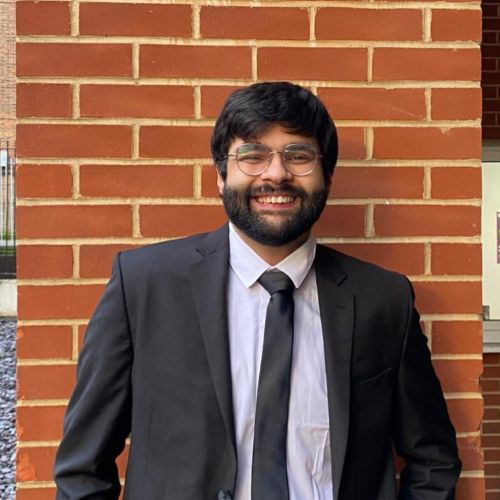
Pratyay is a Research Fellow in the Founders’ Office at the Vidhi Centre for Legal Policy, Delhi. He holds an LLM from the London School of Economics and a BA LLB (Hons) from the West Bengal National University of Juridical Sciences, Kolkata. He is interested in public law, with a special emphasis on civil rights, institutional accountability and comparative constitutional law. Prior to joining Vidhi, he has worked as a full-time Research Assistant to a Senior Advocate, as an Occasional Research Assistant at the London School of Economics and as a Regulatory Analyst at RegGenome.